
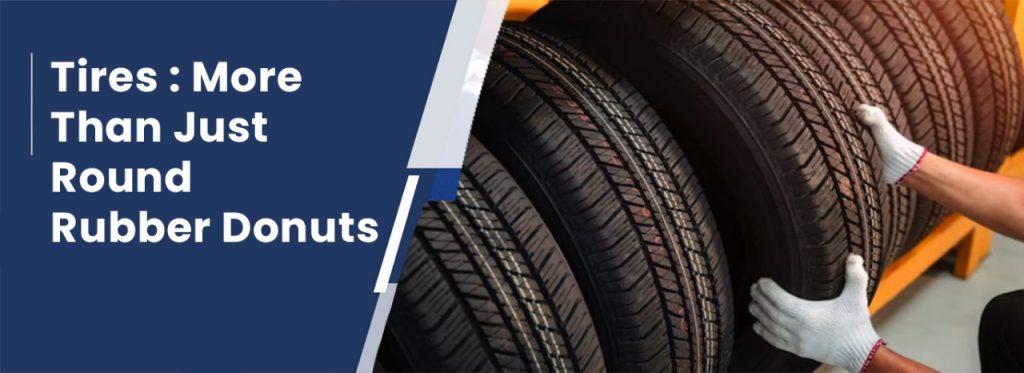
They Don’t Have Filling, But They Do Have Purpose
Look, we all take tires for granted. They’re down there, doing tire things, not making a fuss—until one of them goes flat and ruins your day, your outfit, and your relationship with Mondays.
But tires are way more than just big rubber donuts. They’re engineering marvels. They’re safety systems. They’re traction artists. They’re… well, still round—but they’re important.
Let’s roll into the world of tires and why they deserve more love than they get.
1. What Tires Actually Do (Besides Exist)
At first glance, a tire’s job seems simple: hold up the car, roll around, try not to explode.
But really, they do a lot more:
Support the vehicle’s weight (thousands of pounds!)
Provide traction for acceleration, braking, and cornering
Absorb shocks from the road like little rubber cushions
Communicate road conditions to your suspension and steering
And oh yeah—keep you alive when things get sketchy
Basically, your tires are your car’s shoes. And driving with worn-out tires is like trying to sprint in flip-flops during a hurricane.
2. Anatomy of a Tire: It’s Not Just Rubber
Tires have layers—like ogres, onions, and emotionally unavailable exes.
Here’s a quick breakdown:
Tread: The part that touches the road. Designed with patterns to grip the surface, channel water, and resist wear.
Sidewall: The outer wall of the tire. It holds important info like size, speed rating, and that mysterious “DOT” code.
Belts: Steel belts inside the tire add strength and durability.
Bead: The part that locks the tire onto the rim.
Inner liner: A rubber layer that keeps air sealed inside.
Think of it like a taco:
Tread = the tortilla (grippy and on the outside)
Belts = crunchy shell
Sidewall = soft edges
Air inside = the guac. You don’t want to lose it.
3. Tire Types: Because Not All Rubber Is Created Equal
All-Season Tires: Your basic “I do everything decently” tire. Great for most weather—except snowstorms and track days.
Winter Tires: Soft, grippy rubber that stays flexible in freezing temps. Think snow boots for your car.
Summer Tires: Maximum grip in dry and wet warm conditions. Basically racing sneakers.
Performance Tires: For when you want handling so sharp it slices corners.
Off-Road Tires: Chunky, aggressive treads. Mud’s worst enemy.
Run-Flats: Let you drive for a bit even after a puncture. Expensive, but convenient—like fancy socks that never get holes.
4. The Great Air Pressure Debate
Tires are needy. They want air. But not too much, and not too little.
Too low: Causes tire flexing, overheating, poor fuel economy, and wear on the edges. Also dramatically increases the chance of a blowout.
Too high: Reduces grip, wears the center of the tread, and gives you a ride as stiff as a shopping cart wheel.
Pro tip:
Check your car’s driver-side door jamb or manual for the right PSI—not the number on the tire itself. That’s the maximum, not the recommended.
5. Tread Depth: The Haircut You Didn’t Know You Needed
Tires with bald tread = driving in the rain wearing socks.
New tires usually have 10/32” to 12/32” of tread. Once you hit 2/32”, it’s legally and functionally time to replace them.
The Penny Test:
Grab a penny.
Stick Lincoln’s head into the tread.
Can you see the top of his head?
→ Time to shop for new rubber.
6. Tire Rotation: Not Just a Fancy Dance Move
Rotating your tires regularly (every 5,000 to 8,000 km) helps them wear evenly. This means:
Longer life
Better performance
Less chance of one tire saying “I’m out” during a rainstorm
It’s like switching shoes between feet every few days—if that made any sense and didn’t make people think you were weird.
7. Wheel Alignment & Balancing: The Unsung Heroes
Alignment makes sure your wheels point in the right direction. If your car pulls to one side like it’s got an opinion, it’s time.
Balancing fixes uneven weight distribution so your tires spin smoothly—no weird vibrations, no premature wear.
These are easy to ignore… until your steering wheel feels like it’s trying to communicate in Morse code.
8. Fun With Tire Labels (and What They Actually Mean)
A tire labeled P215/65R15 95H is not trying to win a Scrabble game.
It means:
P = Passenger car tire
215 = Width in mm
65 = Aspect ratio (sidewall height as % of width)
R = Radial construction
15 = Rim diameter in inches
95 = Load index (how much weight it can carry)
H = Speed rating (how fast it’s certified to go)
If you didn’t get all that, don’t worry—just know that tires have their own secret language. But luckily, tire shops speak it fluently.
9. Final Thoughts: Be Good to Your Donuts
Your tires are the only part of your car that touches the road—and they do it at high speed, in all weather, carrying your entire life inside the cabin.
They’re not just rubber rings. They’re safety nets, performance partners, and fuel economy boosters.
So:
Check the pressure monthly.
Rotate them on schedule.
Replace them before they scream for help.
Because flat tires don’t care about your plans—or your outfit—or your dignity when you’re changing one in the rain.