Vehicle Details
Model: BMW X1 sDrive20d
Chassis: F48
Year: 2019
Engine: B47 2.0L Diesel
Transmission: Automatic
Mileage: ~50,000 km
Condition: Regular use, no prior major engine repairs
Customer Complaint
The customer reported:
White smoke from the engine compartment
Strong burning rubber smell
Symptom appeared within 30–60 seconds of engine start
Issue was more pronounced with air conditioning ON
The vehicle could be driven without AC for short distances, but the issue reappeared immediately when AC load was applied.
Initial Observation & Diagnosis
During workshop inspection:
Smoke was observed near the crankshaft pulley area
Smell clearly indicated overheating rubber
No coolant or oil leak was found in the affected zone
The accessory drive area was stripped for inspection.
Root Cause Identified
After removal of the crankshaft pulley assembly, the following was observed:
The crankshaft vibration damper had separated into two pieces
The bonded rubber elastomer between inner hub and outer inertia ring had completely failed
Outer pulley ring had lost concentric alignment and was slipping
This caused:
Severe friction with the serpentine belt
Rapid heat generation
Smoke and rubber burning smell
Diagnosis Conclusion
Catastrophic failure of the crankshaft vibration damper (harmonic balancer) due to elastomer disintegration.
Why the Problem Appeared Mainly with AC ON
With AC engaged:
Compressor load increases suddenly
Torsional load on crankshaft rises
A weakened or failed damper can no longer absorb vibration
Outer ring slips against belt → rapid overheating
Smoke and smell appear within seconds
This explains why:
Vehicle could be driven without AC
Failure manifested quickly with AC ON
Parts Replacement Challenge (Major Learning Point)
Initial Confusion
During parts procurement, multiple conflicting part numbers were encountered across sources:
BMW OE numbers
Continental / INA / Corteco / Gates / Dayco references
Some listings described the part as “pulley”, others as “vibration damper”
This created uncertainty whether certain parts were:
Pulley-only (solid), or
True vibration dampers (with rubber elastomer)
Critical Verification Step – Physical Inspection
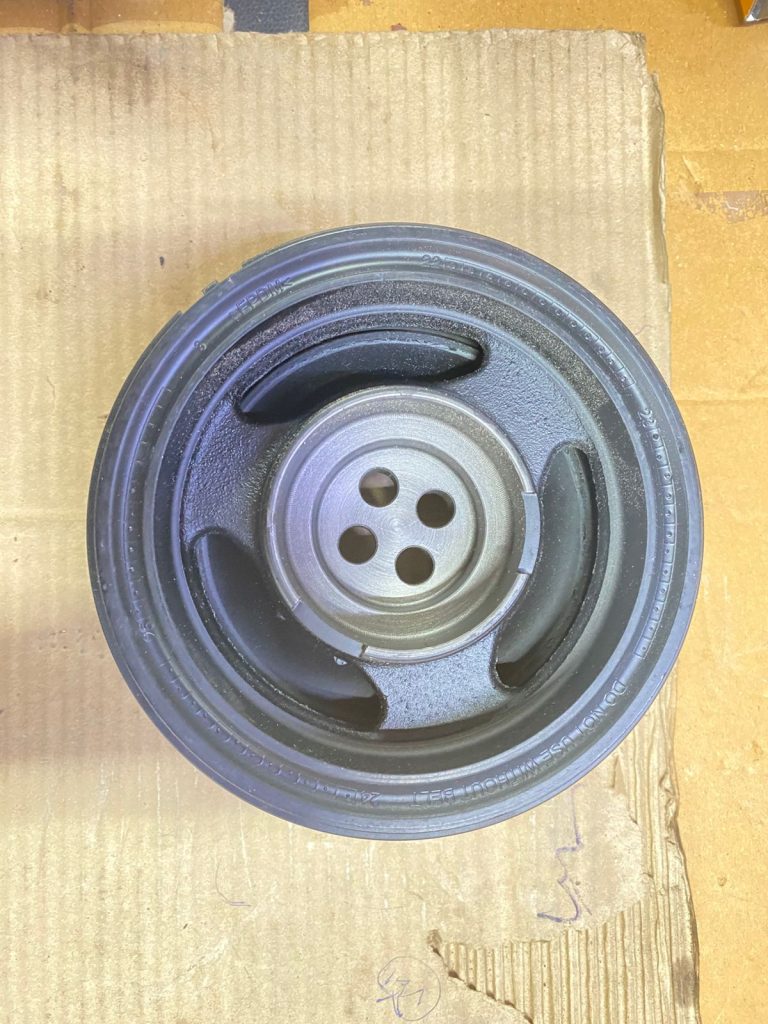
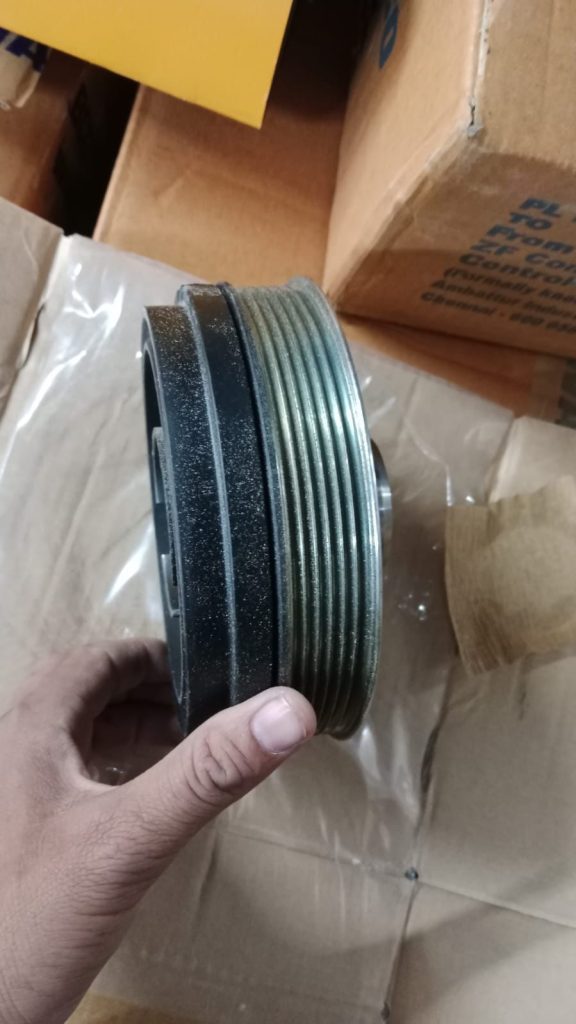
A Continental-branded part (VD1156) was supplied.
The packaging description stated “Pulley”, which raised concern.Visual & Physical Inspection Confirmed:
Clearly visible thick rubber elastomer
Elastomer bonded between inner hub and outer inertia ring
Classic two-mass torsional damper design
No free rotation between hub and pulley
Correct belt alignment and offset
Conclusion: Despite the word “pulley” on the label, the component was a true crankshaft vibration damper.
Installation & Validation
Damper installed using correct procedure
New serpentine belt fitted
Tensioner and idler pulleys inspected
Crank bolt tightened as per specification
Road Test Results
Engine ran smoothly
No smoke or burning smell
AC operation normal
No abnormal noise or vibration
Belt tracking correct
 Repair successful
Final Root Cause Summary
Aspect Finding Failure mode Rubber elastomer disintegration Trigger Increased accessory load (AC ON) Mileage ~50,000 km Cause Age + thermal degradation of elastomer Misuse None Design issue Elastomer is a time-sensitive component Key Technical Learnings
1. Vibration dampers are NOT lifetime components
Even on premium vehicles, elastomer-based dampers can fail due to:
Heat
Age
Diesel torsional vibration
2. Catalog descriptions can be misleading
Terms like “pulley” are often used loosely
Always verify physical construction, not just part descriptions
3. Visual confirmation is critical
A true damper must have:
Inner hub
Outer inertia ring
Bonded rubber elastomer
4. System-level thinking prevents repeat failures
Whenever a damper fails:
Inspect / replace belt
Check tensioner and idlers
Verify crank bolt torque
Preventive Recommendation
For BMW diesel engines (especially B47 family):
Inspect crankshaft vibration damper condition during belt service
Replace at first signs of:
Cracking rubber
Belt misalignment
Noise or wobble
Avoid installing solid pulley substitutes
Closing Statement
“This case highlights the importance of understanding component function beyond catalog descriptions. Correct diagnosis, physical verification, and engineering judgment ensured a successful repair and prevented repeat failure.”