Vehicle Details
Make / Model: Volkswagen Polo
Year: 2011–2012
Engine: 1.2 TDI, 3-cylinder, Common Rail
Engine Code: CFWA
ECU: Bosch EDC17
Mileage: High (typical wear conditions)
1. Customer Complaint
Intermittent MIL ON and flashing glow-plug (coil spring) warning
Reduced engine power (limp mode at times)
Occasional rough idle / hesitation
Fault codes returning after restart even when temporarily cleared
2. Fault Codes Observed
Primary and repeated DTC:
P0341 – Camshaft Position Sensor (G40): Range / Performance
Associated / historical faults observed during diagnosis:
P2563 – Turbocharger Boost Control Position Sensor (G581)
Intermittent injector circuit fault (Injector 2)
3. System Description (Relevant to P0341)
The CFWA engine uses:
Crankshaft speed sensor (G28) – engine speed and reference
Camshaft position sensor (G40) – phase reference and synchronization
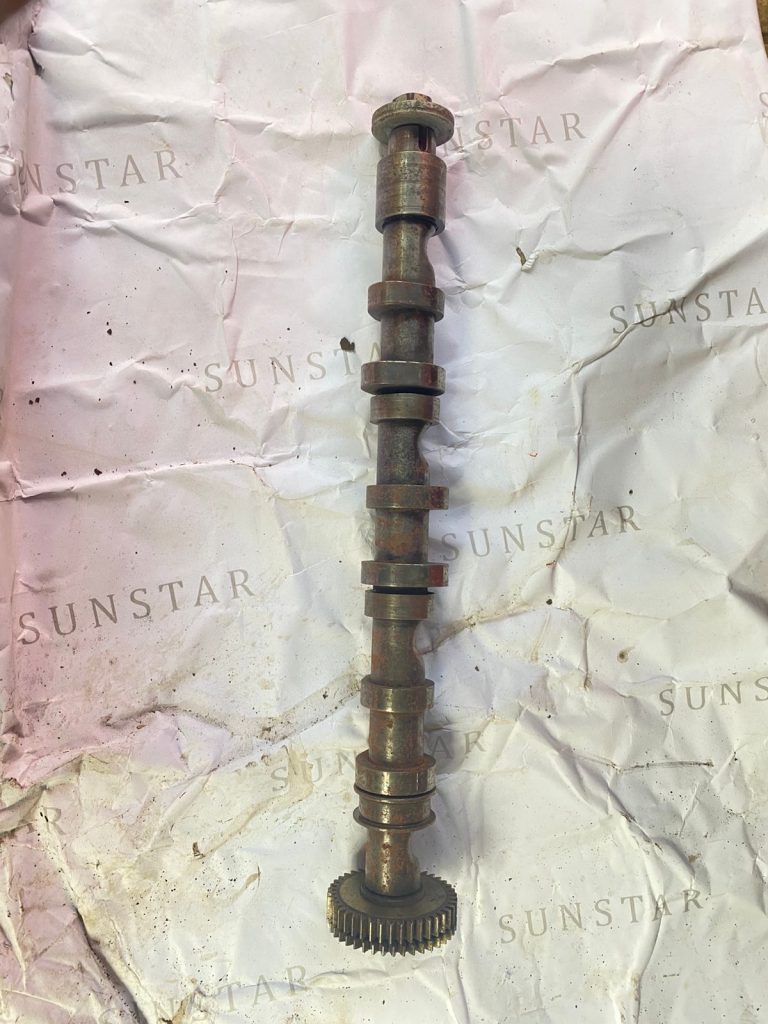
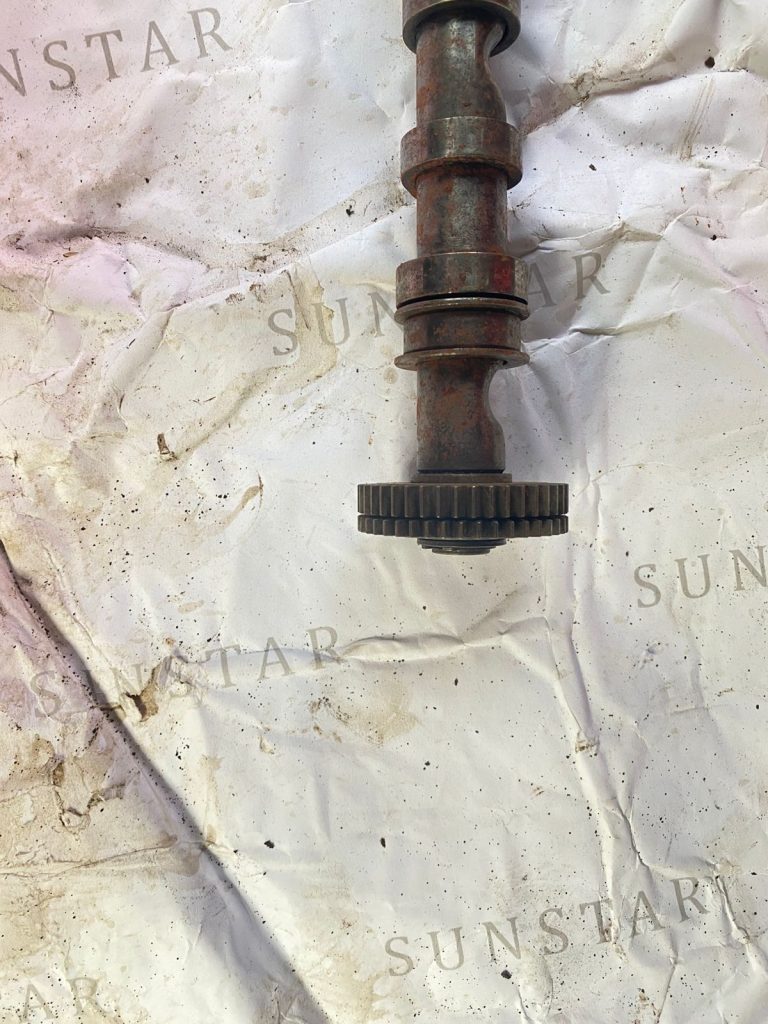
Reluctor / trigger wheel mounted on camshaft pulley hub
The ECU continuously compares:
Crankshaft signal phase
Camshaft signal phase
If correlation exceeds a calibrated tolerance window → P0341 is stored.
4. Initial Checks Performed
4.1 Electrical Checks
Verified 5 V reference, ground, and signal integrity at G40
No wiring open/short found
Sensor replaced once (preventive) – fault remained
4.2 Live Data Comparison
Crankshaft RPM and camshaft RPM matched numerically
However, ECU still flagged range/performance error, indicating a phase or profile issue, not a missing signal
5. Mechanical Investigation
5.1 Timing Belt Verification
Timing belt removed and refitted using correct locking tools
Crankshaft and camshaft mechanical timing verified
No tooth jump or belt slip found
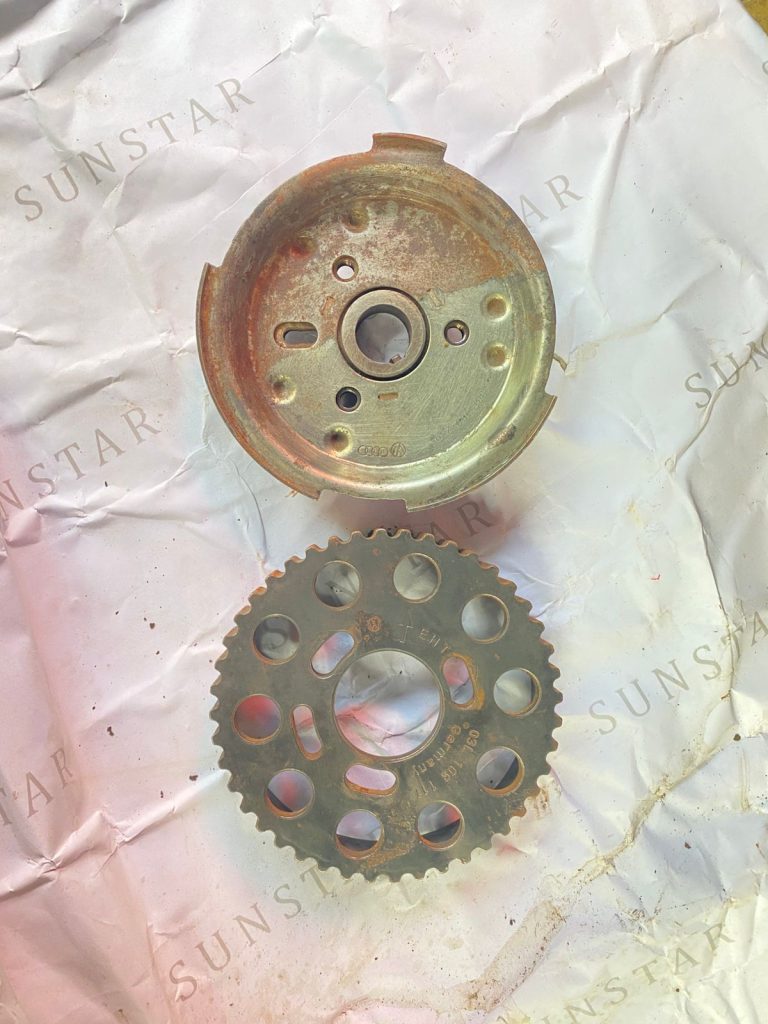
5.2 Camshaft Pulley & Trigger Assembly Inspection
During deeper inspection:
Camshaft pulley assembly removed
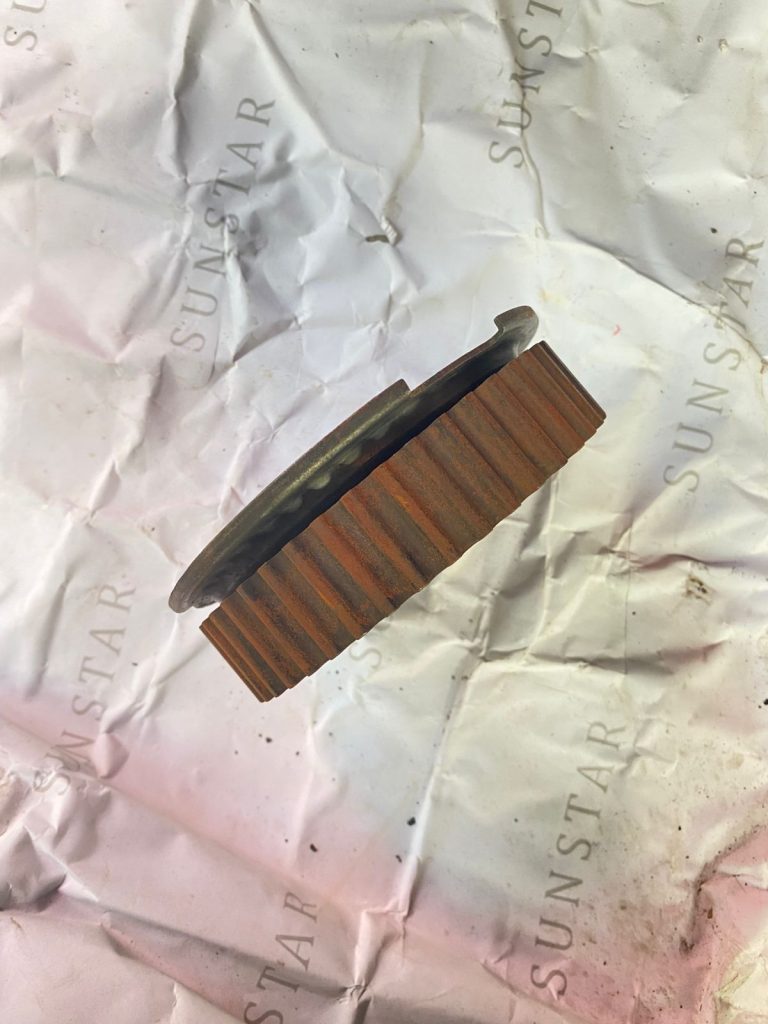
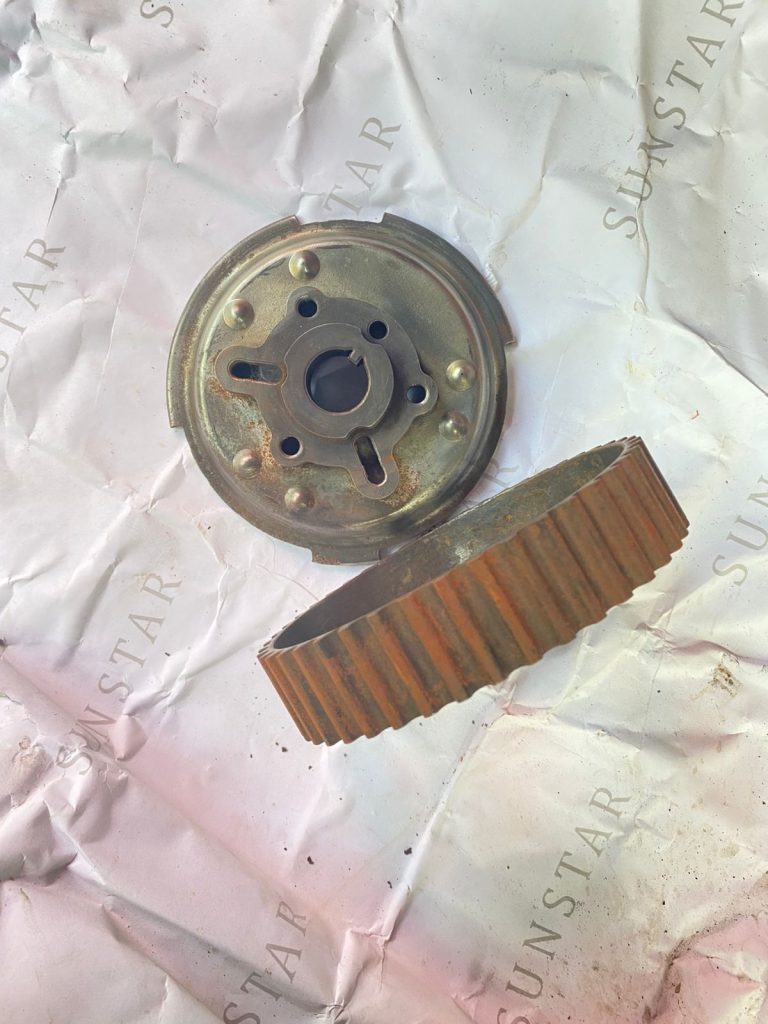
Found multi-part design consisting of:
Timing belt pulley
Steel trigger wheel (reluctor)
Plastic spacer / carrier between pulley and trigger wheel
5.3 Critical Finding
Plastic spacer was cracked and partially disintegrated
Trigger wheel position had shifted minutely relative to camshaft
This caused cam signal phase drift, especially when hot or under load
 Even a small angular shift is enough to trigger P0341
6. Why the Fault Was Intermittent
At cold start: correlation acceptable
After warm-up / load changes: plastic carrier deformation increased
ECU detected cam/crank phase drift → P0341
Clearing codes temporarily restored normal operation until drift reappeared
7. Corrective Action
7.1 Mechanical Repair
Camshaft pulley / hub assembly replaced with correct OEM-spec parts
Trigger wheel correctly indexed and clamped
All mating surfaces cleaned
7.2 Reassembly
New timing belt installed
Correct torque sequence followed
Oil seal inspected and renewed
7.3 ECU Procedures
Fault memory cleared
Basic settings / adaptation reset (where applicable)
Engine allowed to idle and reach operating temperature
8. Verification & Results
Engine started normally
No MIL or glow-plug warning
Multiple hot and cold restarts tested
Extended road test completed
P0341 did not return
Live data confirmed:
Stable cam/crank synchronization
No phase deviation during acceleration or deceleration
9. Final Root Cause
Mechanical misalignment of camshaft trigger wheel due to failure of the plastic spacer inside the camshaft pulley assembly.
This caused:
Camshaft signal timing outside ECU tolerance
Persistent P0341 despite correct sensor and wiring
10. Key Learnings (For Technicians)
P0341 is not always a sensor fault
Matching RPM values do not guarantee correct phase correlation
Multi-piece cam pulleys with plastic carriers are a known weak point
Always inspect mechanical signal generation, not just electronics
11. Diagnostic Tips
If P0341 persists after sensor replacement:
Inspect camshaft pulley construction
Check for plastic carriers, spacers, or bonded trigger wheels
Look for heat-related deformation
12. Conclusion
This case highlights the importance of mechanical integrity in modern engine management systems. Advanced diagnostics and persistence led to a successful resolution of a fault that initially appeared electronic but was ultimately mechanical in nature.